

How to Distinguish Some Fabrics That Look Similar But Feel Different
In the fashion world, knowing how to differentiate between different types of fabrics is an important skill to help you choose the right outfit, because there are materials that look similar but bring completely different experiences.
Why Do You Need to Know How to Distinguish Fabric Types?
When shopping, you often come across fabrics that look similar but feel completely different. Some are cool and breathable, while others are hot and stuffy. Understanding how to distinguish between different types of fabric will not only help you choose the right clothes for your needs, but also help preserve your clothes longer.
As sustainable fashion becomes more mainstream, young consumers increasingly want to understand the origins of materials. Knowing how to differentiate is also an affirmation of a responsible lifestyle, choosing to dress smartly instead of following short-term trends.

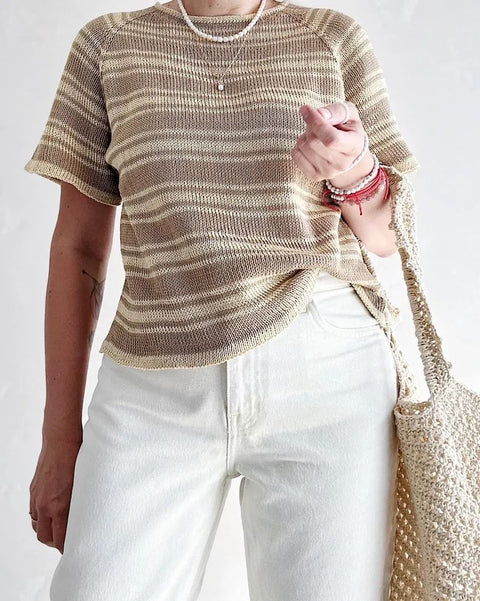
The fabrics look similar but feel completely different (Photo: Pinterest)
Commonly Confused Fabric Pairs and How to Distinguish Them
1. How to Distinguish Cotton and Linen Fabrics
Cotton and linen are both natural, and look quite similar, but cotton is softer, easier to fold, and slightly elastic. Linen is cooler, rougher to the touch, and tends to wrinkle quickly after folding. In the summer, linen is always preferred for cool outfits, while cotton is suitable for everyday wear thanks to its softness and ease of care.
2. How to Distinguish Between Knitted and Woven Fabrics
The difference lies in the weaving technique. Knitted fabrics have high elasticity and soft surface, suitable for making T-shirts. Meanwhile, woven fabrics are strong, less elastic, often used for shirts or trousers. If you look closely, you will see that knitted fabrics form continuous loops of yarn, while woven fabrics have parallel lines of yarn at right angles to each other.

Stretch knit, stand-up woven (Photo: Pinterest)
3. How to Distinguish Modal and Viscose Fabrics
Both are man-made fibers made from cellulose, but viscose is soft, drapey, and wrinkles easily, while modal is more durable, wrinkles less, and is highly absorbent. Modal clothes tend to hold their shape better after many washes. If you want your dress or shirt to stay neat for a long time, modal is the right choice.
4. How to Identify Fake Polyester Fabric
Polyester is often labeled as fake natural. Real polyester fabric has a slight shine, feels cool to the touch, is tough and tear-resistant. Poor quality polyester will be rough and easy to pill after a few washes. This is the reason why many young people today look for standard cotton and polyester blends because they are both durable and easy to care for.
5. How to Distinguish Real Cellulose Fabric
Real cellulose fiber fabric is usually smooth, airy and absorbs moisture well. When burned, it will burn into fine ash, with a smell of burning wood. Meanwhile, synthetic fiber fabrics often leave hard plastic particles after burning. This helps consumers distinguish when choosing safe, environmentally friendly clothing.

A quick way to distinguish fabric materials (Photo: Pinterest)
Conclusion – Smart Fashion Starts with Materials
Understanding how to differentiate between different types of fabric is the way to become a sophisticated consumer, knowing how to choose clothes that are both beautiful and comfortable. Especially in the context of sustainable fashion, knowing the materials also shows concern for the environment and a responsible lifestyle.
Fashion is not just about what you wear, it’s also about texture, feel and attitude. When you choose cotton over low-quality polyester, or recycled linen over cheap synthetics, it’s a small but significant step towards creating a modern, smart lifestyle.
Related Articles
Bomber-Style Women's Leather Jackets Are Being Sought After Again By Young People
Types of Plaid Fabrics You Need to Know If You Want to Dress Stylishly
