

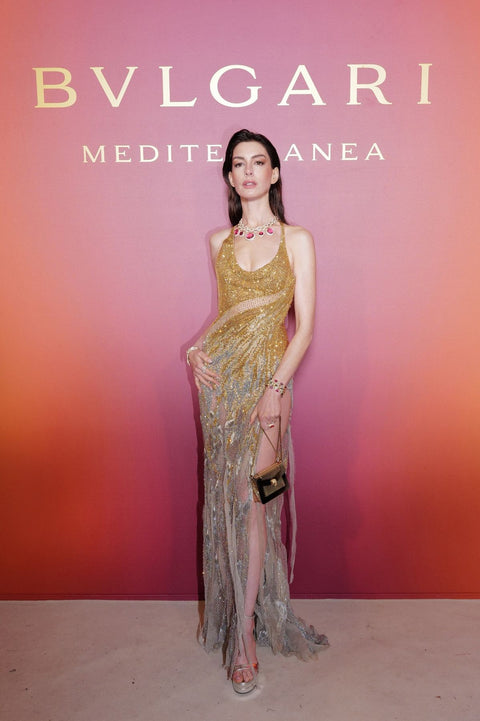
Couture Brands and the Dialogue Between Heritage and the Future
Couture brands are not simply luxury fashion houses, but also embodiments of fashion's cultural heritage, seeking to dialogue with the future through sustainability, technology and individuality.
Couture: From Handmade Hands to Artificial Intelligence and the Concept of “Future”
Couture – a fascinating concept. Where each seam, each layer of fabric not only creates an outfit, but also creates history. Couture brands are a symbol of absolute luxury, the ultimate craftsmanship, where time and technique are exchanged to create a design that no one can copy.
But in an era of fast fashion, digital fashion, and Gen Z customers increasingly emphasizing individuality and ethical consumption, does couture – with all its classicism and splendor – still have a place?
The answer lies not in conservatism, but in the dialogue between heritage and future that couturiers are striving to create every day.
How Couture Luxury Icons Are Transforming?
In the list of famous luxury couture brands , names like Chanel, Dior, Versace always occupy the top position. But even they understand that: surviving the new era cannot rely solely on the glory of the past.
1. Chanel, Dior, Versace: Heritage Must Still Breathe In The New Atmosphere
Couture brands Chanel Dior Versace – each brand represents a unique identity. Chanel is minimalist luxury, Dior is cutting-edge tailoring and femininity, and Versace is boldness and sexuality in fashion. But what do they have in common now? They are all engaged in the question: How to maintain the brand DNA and still become the choice of the new generation?
Recent couture shows have been more than just a playground for tailors and stylists; they’ve also featured AR, AI, and digital interactive elements. Dior presented a feminist-inspired collection through a contemporary lens. Chanel used recycled materials for some of its haute couture designs. Versace combined classic silhouettes with a contemporary pop culture vibe.

Dior – where couture meets contemporary visual art (Photo: Pinterest)
2. Contemporary Couture: New Fashion Houses Are Changing the Definition of Luxury
Another wave, less extravagant but no less artistic, is emerging – the unique contemporary couture brands , young brands that do not chase glitter but focus on ideas, materials and absolute personalization.
Iris van Herpen, Rahul Mishra, Charles de Vilmorin… are typical names in the modern couture group. They do not try to "prettify" in the traditional way, but choose their own language: deformable structures, motion-sensitive motifs, even using algorithms to create shirt forms.
What makes them special is not luxury in the economic sense, but luxury in the intellectual and visionary sense. They represent the spirit of the new age of couture – where each design is a social statement, a living artistic idea.

Modern couture is no longer limited to silk lace – it could be the material of the future (Photo: Pinterest)
Sustainable Couture: It Sounds Contradictory, But It's Essential
It’s hard to believe that a luxury industry, where a dress can take 700 hours to complete, can be associated with the concept of “sustainability.” But in fact, sustainable couture brands are trying to do just that – not just to “please the public,” but for the long-term survival of handmade fashion.
1. When Haute Couture Becomes a Space of Consciousness
Instead of mass-producing, couture is made to order – which reduces inventory and waste. Brands like Ronald van der Kemp and Gabriela Hearst go further by reusing leftover fabrics, collaborating with local artisans, or choosing ethical suppliers.
Modern couture is not just about beauty, it’s about responsibility. Young people today not only want to wear something that looks good, but also want to know who made it, where it came from, and whether it’s contributing to the destruction of the planet.

Haute couture – where beauty meets responsibility for the planet (Photo: Pinterest)
2. The Future of Couture: Technology, Emotion, and Extreme Personalization
In a context where AI can generate 1,000 designs in just a few seconds, couture is even more appreciated for its uniqueness and absolute personalization. In an increasingly digital world, couture is not dead – but has become a “shelter” for true emotions.
Top global couture brands such as Valentino, Elie Saab or Schiaparelli are all looking to push the limits of creativity with technology, while still maintaining the human element. They do not “mechanize” beauty, but put technology to serve emotions – from 3D shaping to personalization according to each customer’s body.
The younger generation doesn’t just want designer clothes. They want a story. And couture, for all its brilliance, is still where those dreams are kept alive – with needle, thread, and almost meditative patience.
Conclusion: Couture Is Not Dead – It Is Being Reborn In A New Way
Couture brands are no longer sitting in fashion museums. They are moving, adapting, and even staying ahead of the curve – using the heritage that has nurtured them for decades.
In an age where everything can be copied, couture is the rare thing that cannot be replicated. And that is what makes it truly valuable – whether in Paris, Tokyo or among limited collections like Root Rotation , where each design is a delicate slice of individual identity and collective responsibility.
Couture is the present, if we dare to look at it with the eyes of the future.
Related Articles
Is Chanel's Global Ambassador Really a Brand Game Changer?
